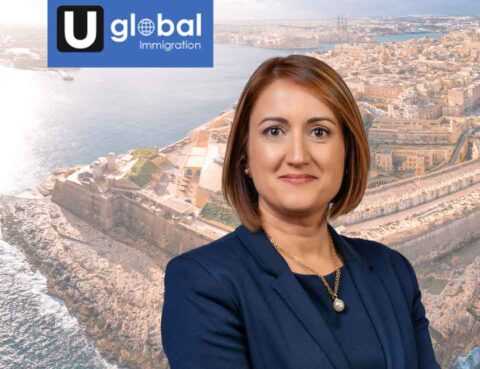
ACC Immigration is delighted to announce that our Managing Partner, Dr Priscilla Mifsud Parker, has been named one of the Uglobal Top 25 Global Migration Attorneys 2025. This respected honour highlights her extensive expertise in Maltese tax residency, residence and citizenship solutions, and international wealth and corporate structuring. Priscilla is one of only two Maltese lawyers featured in this year’s global ranking.
Uglobal Top 25 Global Migration Attorneys
Each year, Uglobal Immigration Magazine recognises professionals who demonstrate leadership, cross‑border advisory excellence, and meaningful contributions to the investment migration sector. Priscilla’s inclusion reinforces her reputation as a leading authority in residence and citizenship planning and international private client advisory.
About Priscilla Mifsud Parker
As Managing Partner at ACC, Priscilla brings over twenty years of experience advising high‑net‑worth families, entrepreneurs, and multinational organisations. Her key areas of specialisation include:
- Wealth structuring and long‑term preservation
- Trusts, estate planning & international succession
- Corporate and business structuring
- International tax planning and optimisation
- Maltese Residence and citizenship solutions
- Cross‑border planning for global families and investors
Priscilla is known for designing, implementing, and managing sophisticated international structures, including reorganisations, high‑value asset optimisation, and regulated investment vehicles.
A recognised innovator, she also led the establishment of Malta’s first cryptocurrency exchange in 2013 — at a time when no regulatory framework existed, marking her as a pioneer in fintech structuring and compliance.
Contribution to the Investment Migration Industry
Priscilla advises international private clients on Maltese tax residency, permanent residence, citizenship pathways, and multi‑jurisdictional wealth strategies.
Her current roles include:
- Chairperson of STEP Malta
- Member of the STEP Malta Technical Sub‑Committee
- Featured specialist on Investment Migration Insider (IMI)
Her presence within STEP reflects her leadership in shaping standards for trusts, estates, and international wealth succession.
ACC’s Residence & Citizenship Advisory
ACC proudly supports global clients with:
- Tailored residence and citizenship solutions
- Compliant, secure wealth and corporate structuring
- Long‑term private client advisory
- Cross‑border tax, estate, and succession planning
Driven by integrity, due diligence, and personalised service, ACC remains a trusted partner for families and individuals seeking stable, strategic international mobility and wealth preservation.
Congratulations to Priscilla on this outstanding achievement. Her recognition within the Uglobal Top 25 Global Migration Attorneys 2025 reinforces her leadership, vision, and significant contribution to the global investment migration sector.

Malta, 2025 yılı itibariyle vatandaşlık rejimini AB hukukunun gelişen içtihadı doğrultusunda yeniden yapılandırma kararı almıştır. Bu yapılandırmanın ardında pek çok sebep bulunsa da merkezinde Avrupa Birliği Adalet Divanı’nın AB vatandaşlığının kazandırılma koşullarına yönelik yaklaşımı yatmaktadır.
Bu karar çerçevesinde Malta doğrudan yatırım sistemini yürürlükten kaldırmış ve vatandaşlığın kazanılmasını önceden belirlenmiş niceliksel bir koşuldan ziyade liyakat, istisnai hizmet, kamu yararı ve bireysel değerlendirme ilkelerine dayalı bir hukuki yapıya oturtmuştur. Malta Vatandaşlık Kanunu’nun ilgili hükümleri uyarınca Bakanlığa tanınan takdir yetkisi her başvurunun ülkeye sağlayabileceği somut ve uzun vadeli katkı üzerinden ayrı ayrı incelenmesini zorunlu kılmaktadır.
Bu dönüşümle birlikte Malta vatandaşlığı artık ekonomik ve ticari işlem niteliği taşıyan bir statü olmaktan çıkarılmış, yalnızca Malta’ya olağanüstü değer kattığı tespit edilen kişiler için istisnai bir mekanizma olarak yeniden tanımlanmıştır.
“Citizenship by Merit” Ne Anlama Geliyor?
Liyakat temelli vatandaşlık (Citizenship by Merit), Malta hukuk sistemine yabancı bir kavram değildir. Bu mekanizma, ilk kez 2017 yılında vatandaşlık mevzuatı içerisine dahil edilmiş ancak uzun yıllar boyunca sadece sınırlı bir çerçevede uygulanmıştır. 2025 yılında yürürlüğe giren yasal düzenlemelerle birlikte ise bu model Malta vatandaşlığına giden başlıca istisnai yol haline gelmiş ve sistematik olarak yapılandırılmıştır.
Bu sistemin dayandığı temel prensip oldukça açık. Malta Devleti ülkeye olağanüstü hizmet sunmuş, uzun vadede sürdürülebilir katkı sağlayabilecek veya vatandaşlığa kabulü ulusal menfaat açısından anlamlı görülen kişilere, Bakanlık takdir yetkisi kapsamında vatandaşlık tanıyabilmektedir. Bu değerlendirme yalnızca mali katkıyla sınırlı tutulmamakta; başvuru sahibinin mesleki yetkinliği, bilgi birikimi, sektörel etkisi ve Malta’nın stratejik hedefleriyle olan uyumu da dikkate alınmaktadır.
Bu yönüyle Citizenship by Merit yaklaşımı, klasik yatırım karşılığı vatandaşlık modellerinden ayrılarak, Malta’nın uzun vadeli kalkınma vizyonu ile örtüşen nitelikli katkıları ön plana çıkarmaktadır.
Kimler Bu Kapsamda Değerlendiriliyor?
Liyakat temelli vatandaşlık başvurularında belirli ve tek tip bir profil tanımı bulunmamaktadır. Aksine, sistem esnek bir yapıya sahip olup başvuru sahibinin Malta’ya sağlayabileceği katkının niteliği, kapsamı ve sürdürülebilirliği esas alınmaktadır. Uygulamada değerlendirmede öne çıkan profiller ise belirli alanlarda yoğunlaşmaktadır.
Bu kapsamda bilim, araştırma, sağlık, kamu yararı ve insani hizmetler gibi alanlarda uluslararası düzeyde tanınırlığı ve somut katkı potansiyeli bulunan kişiler değerlendirme kapsamında öne çıkmaktadır.
Ayrıca sanat, kültür ve spor alanlarında Malta’nın veya evrensel değerlerin temsilinde rol oynayabilecek kişiler ile teknoloji ve inovasyon ekosistemine stratejik katkı sunabilecek uzmanlar da bu kapsama dahildir.
Son olarak filantropi ve sosyal etki alanında sürdürülebilir projeler geliştiren ve Malta toplumuna ölçülebilir fayda sağlayabilecek bireyler de liyakat temelli değerlendirmeye konu edilmektedir.
Hukuki Çerçeve Nasıl Şekillendi?
- Malta Vatandaşlık Yasası’nın 10(9) maddesi, Bakanlığa istisnai durumlarda “Naturalisation” yoluyla vatandaşlık verme yetkisi tanımaktadır. Bu hüküm, liyakat temelli vatandaşlık mekanizmasının temel hukuki dayanağını oluşturmaktadır.
- 2025 tarihli yasal değişiklik (Act XXI of 2025) ile söz konusu takdir yetkisinin kapsamı güncellenmiş; olağanüstü katkı, sürdürülebilir etki ve ulusal menfaat kavramlarının uygulamada nasıl yorumlanacağı daha açık hale getirilmiştir.
- Aynı yıl yürürlüğe giren ikincil düzenleme (Legal Notice 159 of 2025), başvuru sürecinin adımlarını, değerlendirme kriterlerini ve usul kurallarını ayrıntılı şekilde düzenleyerek uygulamaya yön vermiştir.
Vatandaşlık başvuruları Komunità Malta Agency (Community Malta Agency) üzerinden yürütülmekte olup, tüm dosyalar bağımsız bir Değerlendirme Kurulu (Evaluation Board) tarafından bireysel olarak incelenmektedir.
Bu yapı sayesinde süreç, yalnızca idari bir başvuru mekanizması olmaktan çıkarılarak; çok boyutlu değerlendirme, şeffaflık ve kamu menfaatinin korunması ilkeleri doğrultusunda işletilmektedir.
Başvuru Süreci Nasıl İlerliyor?
Vatandaşlık süreci başvuru sahibinin Malta’da yasal ikametinin tesis edilmesi ile başlamaktadır. Bu aşamada başvuru sahibinin Malta’yı ziyaret ederek biyometrik işlemlerini tamamlaması ve ülkede fiili olarak ikamet edeceği bir konut edinmesi beklenmektedir.
Bunu takiben sürecin en kritik aşamasını oluşturan Merit Proposal hazırlık sürecine geçilmektedir. Bu belge yalnızca usuli bir başvuru metni değil; başvuru sahibinin kimliğini, Malta’ya sağlayabileceği istisnai katkının niteliğini, bu katkının ülke açısından neden anlamlı ve farklı olduğunu ortaya koyan kapsamlı bir teklif dosyasıdır. Aynı zamanda başvuru sahibinin Malta ile uzun vadede nasıl bir bağ kuracağının somut biçimde ortaya konulması beklenmektedir.
Hazırlanan Merit Proposal, Komunità Malta Agency (Community Malta Agency) aracılığıyla Değerlendirme Kurulu’na sunulur. Bunu takiben başvuru sahibi hakkında detaylı bir due diligence süreci yürütülür; gerekli görülmesi hâlinde ek belge talep edilebilir veya mülakat aşamasına geçilebilir.
İkamet Süresi ve Nihai Başvuru
Vatandaşlığa ilişkin nihai başvuruya geçilebilmesi için, başvuru sahibinin Malta’da en az sekiz aylık yasal ikamet süresini fiilen tamamlaması beklenmektedir. Bu sürenin tamamlanmasının ardından, doğallaştırma yoluyla vatandaşlık için resmî “Naturalisation” başvurusu yapılabilmektedir.
Bu aşamada başvuru sahibinin aşağıdaki hususları belgelendirmesi gerekmektedir:
- Malta’daki yasal ikametinin kesintisiz şekilde devam ettiğini,
- Malta’da uygun bir konuta sahip olduğunu (satın alma veya kiralama yoluyla),
- Daha önce taahhüt edilen katkının gerçekleştirildiğini veya somut şekilde planlandığını.
Başvurunun olumlu sonuçlanması hâlinde, başvuru sahibi ve aile üyelerinin Malta’ya gelerek sadakat yemini etmesi beklenir. Bu aşamanın tamamlanmasıyla birlikte Malta vatandaşlığı resmen kazanılmış sayılır.
Ancak süreç vatandaşlığın verilmesiyle sona ermemektedir. Malta makamları vatandaşlık sonrasında da başvuru sahibinin sunduğu taahhütlerin yerine getirilip getirilmediğini denetleme hakkını saklı tutmaktadır. Bu yönüyle sistem yalnızca başvuru anına değil, vatandaşlık sonrasındaki sürekliliğe de odaklanan bir yapı taşımaktadır.
Aile Üyeleri Sürece Dahil Edilebilir mi?
Evet. Başvuru sahibinin eşi (veya uzun süreli partneri) ve finansal olarak kendisine bağımlı olan 29 yaş altındaki evlenmemiş çocukları başvuruya dahil edilebilir. Her aile üyesi için ayrıca güvenlik ve uygunluk değerlendirmesi yapılır.
Malta Vizyonu 2050 ile Uyum
Malta 2050 Vizyonu ülkenin uzun vadeli kalkınma yaklaşımını ortaya koyan ve büyümeyi yalnızca ekonomik göstergelerle sınırlamayan bütüncül bir yol haritasıdır. Bu vizyon nitelikli ekonomik büyüme, yüksek katma değer yaratılması, çevresel sürdürülebilirlik, teknolojik gelişim ve toplumsal refah gibi unsurları merkeze almaktadır.
Bu çerçevede belirlenen stratejik sektörler arasında finansal hizmetler, dijital ekonomi ve teknoloji, fintech ve blockchain uygulamaları, sağlık ve yaşam bilimleri, yenilenebilir enerji ve çevresel sürdürülebilirlik projeleri, denizcilik, yatçılık ve havacılık gibi katma değeri yüksek alanlar öne çıkmaktadır. Aynı zamanda nitelikli insan kaynağının ülkeye çekilmesi, bilgi transferi ve uzun vadeli yatırım kültürünün teşvik edilmesi de Vizyon 2050’nin temel hedefleri arasında yer almaktadır.
Liyakat temelli vatandaşlık yaklaşımı, bu stratejik vizyonun doğal bir uzantısı olarak, Malta’ya olağanüstü katkı sağlayabilecek bireylerin 2050 Vizyonu kapsamında önceliklendirilen sektörlere yapacakları yatırımlar, sağlayacakları bilgi birikimi ve yaratacakları ekonomik ve toplumsal etkiyi esas almaktadır. Bu yönüyle sistem, yalnızca sermaye girişini değil, Malta’nın uzun vadeli kalkınma hedefleriyle uyumlu, sürdürülebilir ve nitelikli katkıları önceliklendirmektedir.

As global uncertainties persist, many Americans are turning to second residence or citizenship options that offer security, mobility, and lifestyle benefits, without having to renounce American citizenship. Malta, an English-speaking EU island nation, provides two standout routes to residence and citizenship: the Malta Permanent Residence Programme (MPRP) for lifelong residency and Citizenship by Merit, granting citizenship in Malta.
This article compares residence vs. citizenship, highlights key motivations for Americans, and details the latest requirements, benefits, and why Malta remains a top choice for Americans seeking residence and citizenship.
Why Malta?
Malta offers Americans a captivating Mediterranean escape that feels both exotic and remarkably accessible. As an English-speaking archipelago in the heart of the Mediterranean, it eliminates language barriers entirely. You can chat easily with locals, read signs without effort, and order food confidently. Its compact size means everything is just a short drive or ferry ride away, making exploration relaxed and straightforward compared to larger European countries.
The islands deliver an extraordinary depth of history in a small space. You’ll find ancient megalithic temples older than the pyramids, grand Baroque architecture, and the fortified city of Valletta, a UNESCO World Heritage site. Dramatic fortifications tell stories of knights, sieges, and empires across centuries. For Americans who love rich cultural heritage paired with stunning visuals, Malta feels like stepping into a living history book layered with Phoenician, Roman, Arab, Norman, and British influences at every turn.
The natural beauty stands out vividly: crystal-clear turquoise waters, dramatic cliffs, hidden coves, and the iconic Blue Lagoon on Comino create a paradise for swimming, snorkeling, diving among world-class wrecks and caves, or simply relaxing on scenic beaches. With over 300 days of sunshine each year, the climate provides reliable warmth that contrasts sharply with many U.S. regions. It’s ideal for escaping winter or enjoying a summer that stays pleasantly warm thanks to refreshing sea breezes.
Food and daily life complete the appeal. Maltese cuisine blends fresh Mediterranean flavors with delicious seafood, savory pastizzi pastries, and other traditional dishes served in welcoming settings. The dining scene has evolved into a vibrant mix of authentic eateries and modern spots including Micheline guide restaurants.
Whether you’re after adventure, relaxation, culture, or simply a beautiful island getaway with unmistakable European flair, Malta combines accessibility, history, scenery, and warmth in a way that leaves many American visitors wondering why they waited so long to experience it.
Malta Residence vs. Citizenship: Key Differences
Residence and citizenship represent two distinct legal statuses in any country, including Malta. Residence grants the right to live and work in the country for an indefinite period.
Citizenship, by contrast, is the highest form of membership in a nation, conferring full and permanent belonging. Citizens enjoy comprehensive rights, including voting, holding a national passport (with its associated travel privileges), consular protection abroad, and lifelong security.
- Malta Permanent Residence (MPRP): Grants indefinite right to live and work in Malta, and visa-free Schengen travel (90 days in 180). It provides a stable “Plan B” with family inclusion with the ability to include up to five generations. Moreover, children included in such an application maintain their PR status for life even once they stop being financially dependent on the applicant or have their own spouse.
- Malta Citizenship: Confers Maltese nationality with extensive international mobility, including a highly ranked passport offering visa-free access to 190+ destinations. Citizenship grants the right to live, work, and establish residence across Europe, access to consular protection abroad, and the ability to pass citizenship to future generations. Malta permits dual nationality, meaning U.S. citizens are not required to renounce their existing citizenship.
Why Americans Choose Malta for Residence or Citizenship
Malta appeals to U.S. citizens seeking diversification:
- Geopolitical & Economic Security: A stable EU base.
- Enhanced Global Mobility: Schengen access (residence) or full citizenship.
- Mediterranean Lifestyle: 300+ sunny days, historic sites, beaches, and relaxed pace.
- Top-Tier Safety: Malta ranks 12th safest globally according to recent indexes.
- English as Official Language: No translations needed for documents, applications, or daily life, making it ideal for Americans.
- Family Inclusion: Possible to include spouses/partners and dependent children (up to age 28)
- LGBTQ+ Friendliness: Malta tops the ILGA-Europe Rainbow Index for 10 consecutive years. Full marriage equality (since 2017), joint adoption, conversion therapy ban, strong anti-discrimination laws, and gender recognition make it one of the world’s most progressive and welcoming destinations for LGBTQ+ individuals, couples, and families.
- No Relocation Required : Zero minimum stay for MPRP allowing applicants to still reside in the US.
- Better Accessibility: Delta Air Lines launched seasonal nonstop flights from New York (JFK) to Malta (MLA) from June 2026.
Malta Permanent Residence Programme (MPRP): Requirements & Benefits
Administered by the Residency Malta Agency, the MPRP grants lifelong permanent residency from approval, making it ideal for Americans wanting a place in Europe to call home.
Core Requirements
- Government Fees & Contribution
- Non-refundable Administrative Fee: €60,000 (main applicant) + €7,500 per adult dependent (spouse/partner, adult children, parents/grandparents).
- Non-refundable Government Contribution: €37,000 (payable within 8 months of approval).
- Property Investment
- Purchase qualifying residential property ≥ €375,000, or rent ≥ €14,000/year.
- Charitable Donation
-
- €2,000 to a registered Maltese NGO (philanthropy, culture, sports, science, animal welfare, arts).
In order to be eligible to apply under the MPRP programme, applicants are to be covered by a health insurance policy in Malta.
Major Benefits
- Lifelong residency for main applicant + family (effective immediately).
- Single application includes spouse/partner (including same-sex), unmarried/financially dependent children up to age 28, dependent parents/grandparents.
- Children retain PR after marriage or employment; can extend to their spouses/children.
- No minimum stay, language test, or relocation obligation.
- Visa-free Schengen travel.
- LGBTQ+ families enjoy Malta’s leading equality protections.
Malta Citizenship by Merit Pathway
Following 2025 reforms, this discretionary route replaces direct investment with merit-based naturalisation. It targets exceptional contributions to science, technology, arts, sports, philanthropy, entrepreneurship aligned with Malta’s Vision 2050.
Malta Citizenship by Merit is a naturalisation pathway under Maltese nationality law, reserved for individuals whose exceptional achievements, services, or contributions are clearly deemed to be in Malta’s national interest.
Granted at the discretion of the Minister under the Maltese Citizenship Act (Cap. 188), as amended in 2025 and implemented through specific regulations, this route is not based on fixed criteria. Each application is assessed individually on its own merits, with a strong emphasis on demonstrable public value. Eligible candidates typically include leaders and high achievers in fields such as science and research, technology and innovation, entrepreneurship, arts and culture, international sport, education, philanthropy, and social or humanitarian initiatives.
Authorities assess both past achievements and future commitments, focusing on tangible outcomes for Malta such as job creation, financing of national interest projects, innovation, cultural or educational advancement, and long-term social or economic sustainability.
Successful applicants may include their immediate family members and, if approved, are granted Maltese citizenship, offering extensive global mobility, a secure and reputable jurisdiction for residence or business, access to quality education, and all the benefits that Maltese citizenship grants.
Malta as Your European Option
For Americans, the MPRP delivers straightforward, family-inclusive permanent residency with minimal disruption while Citizenship by Merit offers Maltese citizenship for contributing to Malta. Both preserve U.S. citizenship, leverage Malta’s exceptional safety, English environment, and Mediterranean lifestyle.
If you’re considering Malta as your European base, we’re here to help you evaluate the right pathway for you and your family. From permanent residency under the MPRP to citizenship options by merit, we provide clear guidance tailored to U.S. citizens.
Our legal services are led by licensed agent Dr Priscilla Mifsud Parker, ensuring your application is handled in full compliance with Maltese regulations.
Contact us to discuss your goals, eligibility, and next steps with confidence.

Malta’s Golden Visa programme, formally known as the Malta Permanent Residence Programme was formally enacted into law by means of Legal Notice 122 of 2021 in April of 2021 and further amended via Legal Notice 310 of 2024 and Legal Notice 146 of 2025. The introduction of the MPRP happened with the announcement of the restrictions of the Portugal Golden Visa and rumours of its possible closure. In February 2024, the Portuguese Prime minister announced that his government would end the Golden Visa Programme. Subsequently in October, the Portuguese President Marcelo Rebelo de Sousa confirmed the enactment of the ‘More Housing’ Bill with the intention of removing the option to invest in property as a way to apply for the golden visa programme in Portugal. Hence till today the Portuguese residence programme is still open for investors, without the option to invest in real estate. In order to be eligible to apply for the Portuguese Golden Visa, applicants are now required to invest at least €500,000 in a private equity fund prior to the submission of the application.
As a result, Malta presents the best alternative to Portugal’s golden visa programme for a number of reasons.
Comparison: Malta Golden Visa – Portugal Golden Visa
As a Schengen & EU member, Malta’s residence by investment programme has been a popular alternative for non-EU nationals seeking a safe European country which is centrally located in the Mediterranean Sea, making it an ideal base for travelling. Malta is also part of the Commonwealth as it was a colony of the UK until 1964. As a result Malta has two official languages, Maltese and English, making it effortless to communicate with locals on the island or in the instance of full relocation to Malta. Below you can find the main differences between Permanent Residency in Malta and the Golden Visa in Portugal.
Malta requires investment only on approval of the PR Application
One of the main differences between Malta and Portugal’s Golden Visa programme is that whilst in Portugal the investor would need to invest €500,000 in funds before the submission of the application, the investment is only required once the application is approved in Malta. In addition, Malta also grants the option to rent rather than purchasing a property.
The applicant is expected to visit Malta only on approval
Given that in Malta, the investor would need to rent or purchase a property only on approval, there is no requirement to visit before the issue of the letter of approval in principle. In fact, in Malta, the submission of the application is done by the licensed agent through a Power of Attorney. Once the letter of final approval is issued, the applicant would be invited to visit Malta in order to take photos and fingerprints for the residence card to be issued. In Portugal, the applicant would need to visit the country at the outset in order to open a bank account and to make the initial investment in funds. Moreover in order to renew the residence card, the applicant would be required to visit Portugal for at least 7 days in the first year and 14 days in subsequent years.
Malta grants Permanent Residence status immediately compared to a temporary residence permit issued in Portugal
The residence status issued by Malta under the Malta Permanent Residence Programme is immediate permanent residence from day one. Malta issues two documents on approval, one being a certificate of permanent residence without an expiry date, and secondly a residence card which is issued for five years and renewable indefinitely. This means that with a Malta PR, families are given the right to reside in Malta indefinitely from the moment of issuance of the residence certificate. In addition, Malta also offers applicants the option to request an immediate temporary residence card, while they wait for the PR application to be approved.
Portugal on the other hand gives a temporary residence permit which is initially issued for one year and then renewable for two-year periods. In order to maintain residency in Portugal the investor would need to spend at least 7 days in Portugal during the first year and 14 days during subsequent years.
Malta doesn’t require the purchase of a property. Rental of a Property is allowed to apply for Permanent Residence
In Malta, the applicant is given the option to rent OR buy a property. Only on approval, an investor under the Malta PR programme would need to purchase a residential property costing not less than €375,000 for a property located in Gozo or Malta. Alternatively, the applicant would on approval be required to rent a residential property for not less than €14,000 annual rent for a property situated in Gozo or Malta. The applicant is required to keep the qualifying property only for 5 years, however in order for the residence card to be renewed, the applicant would still need to have a property rented or purchased in Malta, without satisfying the minimum thresholds..
Malta requires applicants to provide evidence that they are economically self-sufficient unlike Portugal, in order to be eligible to apply for the Malta Golden Visa applicants would need to show possession of at least €500,000 worth of assets, out of which €150,000 shall be in the form of liquid assets such as money in a bank account or money invested in stocks or bonds. Applicants may alternatively opt to provide €650,000 in capital, with €75,000 of it needing to be in the form of financial assets. In Portugal, applicants are not asked to provide evidence of economic self-sufficiency.
Malta allows the inclusion of four family generations under one application
Under the MPRP, the main applicant may add in the same application the main applicant’s spouse in a monogamous marriage or in another relationship having the same or similar status to marriage; children (up to the age of 28) as long as they are not married and are still financially dependent on the main applicant, and parents/grandparents of both the main applicant and the spouse provided they are also financially dependent on the main applicant.
A special designated agency operates the Malta PR Programme
The Malta Permanent Residence Programme is administered by a designated agency called Residency Malta Agency with the sole responsibility to manage and promote Malta’s residence by investment programme. The Agency is also tasked to receive applications, to conduct due diligence on prospective applicants and to issue the residence cards and certificates. On the other hand the Portuguese Golden Visa Programme is administered by AIMA (Agency for Integration, Migration & Asylum) which is an agency responsible for all immigration matters in Portugal and for monitoring borders hence applications submitted under the Golden Visa programme are processed with other immigration programmes and not given a preferential treatment. As a result applications under Malta’s Golden Visa are processed within a six-twelve month period whilst applications under the Portugal’s Golden Visa sometimes take up to two years to be processed.
Requirements – Malta’s Golden Visa Programme
The Malta Permanent Residence Programme requires investors to satisfy three main requirements. The majority of the requirements are to be paid upon approval of the application. The three requirements are as follows:
1. Pay a one-time government administrative fee of €60,000 and a government contribution of €37,000 (An additional €7,500 government fee is due for each adult dependant child, parent and grandparent included in the same application), and
2. Rent a property in Malta or Gozo for €14,000 per year OR purchase a property for €375,000, and
3. Pay a donation of €2,000 to a local registered philanthropic, cultural, sport, scientific, animal welfare or artistic NGO.
From the above requirements, the applicant is only required to pay a non-refundable fee of €15,000 on submission of the application.
Benefits of Obtaining Malta Permanent Residency
• Having the right to settle, reside and work permanently in Malta
• Include all the family members in the application
• Enjoy visa-free travel within the Schengen Area and the right to reside in Schengen countries for 90 days out of 180 days
• Malta has a Mediterranean climate with mild winters and hot summers
• Cost of living in Malta is low compared to European countries with affordable housing, food and entertainment options
• English is an official language in Malta, making it an attractive destination for English speaking expats
• Malta has a rich cultural heritage and is home to many historical sites and landmarks
• Malta has a high quality of life with excellent healthcare, education and government services
Malta Permanent Residence Programme Application Process
The first step in order to apply for permanent residence in Malta involves the engagement of a licensed agent such as our firm with licence number AKM-ACCA. The applicant signs a Power of Attorney authorising the licenced agent to compile the documents and prepare the application forms for submission. An application is submitted by the licenced agent and the applicant is not required to be in Malta in order to submit an application. Once the required documents and application forms are submitted to the Residency Malta Agency, the applicant would need to pay a non-refundable government fee of €15,000, which is part of the final contribution. On receipt of the application and government fee, the Agency will start reviewing the application and conducting a due diligence exercise. Such process is expected to take 4-6 months, after which the letter of in principle approval is issued. Once the letter of in principle approval is issued the applicant is required to pay the remaining government fees, rent or purchase property and give a donation to charity. Once these requirements are fulfilled, the Residency Malta Agency issues a letter of final approval and the applicant would be required to visit Malta to give biometric data for the residence cards to be issued. Once this is done the applicant becomes a permanent resident of Malta for life.
Get in touch with us for more information about the Malta Permanent Residence Programme
With the EU moving to finalise a mechanism to suspend Schengen visa-free travel for Caribbean countries offering citizenship by investment, interest is shifting towards more secure alternatives within Europe. Residency by investment programmes are gaining ground as strategic options, offering residence rights in the EU without losing Schengen access. Among these, Malta’s Permanent Residence Programme (MPRP) stands out for its stability, transparency, and long-term benefits.
From Caribbean to Europe: A Shift in Global Mobility Strategy
The global investment migration landscape is shifting rapidly, since Caribbean citizenship by investment (CBI) programmes are under increasing scrutiny. This has been especially true following recent decisions by the European Union, the United Kingdom, and the United States to tighten their approach to visa waivers for countries offering citizenship with minimal genuine ties.
Meanwhile, the United States issued a travel ban memorandum naming Antigua and Barbuda, Dominica, St. Kitts and Nevis, and St. Lucia, citing concerns over citizenship grants without residency or genuine connection.
As the viability of Caribbean citizenship by investment programmes comes under increasing pressure, European residency by investment regulations, are gaining prominence as lawful and strategically sound alternatives. While the Schengen Area currently remains accessible to Caribbean passport holders, the situation may change with the European Union’s announcement of legislative reforms to tighten its visa policy.
EU Reform: The Updated Visa Suspension Mechanism
In April 2025, the European Council and Parliament reached a provisional agreement to revise the EU’s visa suspension mechanism. Originally introduced in 2013, the regulation allows the EU to suspend visa-free travel from third countries under specific conditions.
The updated regulation introduces broader grounds for suspension. Chief among them is the operation of investor citizenship schemes that offer nationality without genuine links or long-term commitments. The EU now has greater authority to suspend visa-free access for countries running such programmes, with initial suspensions lasting up to 12 months and potential extensions reaching 24 months.
Additional triggers include:
- Divergence in visa policy from EU standards;
- Weaknesses in document security and hybrid threats;
- Increased asylum claims or overstay rates;
- Deterioration in human rights or rule of law.
The Schengen Area: Europe’s Passport-Free Zone
The Schengen Area includes 29 European countries that have eliminated internal border controls, allowing passport-free movement for residents and eligible visa holders. Malta, a full Schengen member, grants visa-free access to residents under the MPRP for up to 90 days within any 180-day period across the entire zone.
As of 2025, Schengen includes Austria, Belgium, Bulgaria, Croatia, Cyprus, Czech Republic, Denmark, Estonia, Finland, France, Germany, Greece, Hungary, Iceland, Italy, Latvia, Liechtenstein, Lithuania, Luxembourg, Malta, Netherlands, Norway, Poland, Portugal, Romania, Slovakia, Slovenia, Spain, and Sweden.
Malta’s MPRP: A Secure Route to European Residency
Unlike Caribbean citizenship programmes, Malta’s Permanent Residence Programme grants residence in a Schengen Member State. As a result, beneficiaries gain the right to reside in Malta indefinitely and can travel visa-free within the Schengen Area using their Maltese residence card together with their passport.
Malta has built a reputation for political and economic stability, a sound legal system, and a strong compliance culture. The country actively participates in EU and OECD anti-money laundering and financial transparency frameworks.
Key Requirements of the MPRP
To qualify for the MPRP, applicants must meet several legal, financial, and due diligence obligations:
- Government Contribution: €37,000.
- Government Admin Fee: €60,000 covering the main applicant, spouse and all minor kids. An additional gov. fee of €7,500 per adult child, parent, grandparent is also applicable.
- Property Requirement: Minimum annual rent of €14,000 or minimum purchase price of €375,000. The property must be retained for at least five years, and a qualifying property must always be maintained.
- Philanthropic Donation: A donation of €2,000 to a registered Maltese NGO.
- Financial Threshold: Applicants must declare assets of at least €500,000, with €150,000 in liquid financial assets. Alternatively, €650,000 in total assets, with at least €75,000 in liquid financial assets.
- Due Diligence: Applicants must undergo thorough background checks and demonstrate good conduct, along with sufficient stable resources to support themselves and dependants. In addition applicants must disclose their assets and provide evidence of source of wealth and funds.
What Makes MPRP a Standout Alternative?
For individuals seeking secure, long-term residency in Europe with the benefits of Schengen mobility, the MPRP offers a compelling value proposition:
- Lifetime permanent residency for the main applicant and family
- One streamlined application for the entire family unit
- Inclusion of children (unmarried, dependent, up to age 28) and financially dependent parents or grandparents
- PR retention even if children later marry or start working
- Future family rights, including spouses and children of the originally approved children
- Immediate issuance of temporary residence cards while applicants wait for their PR application to be processed
- Visa-free travel across the Schengen Area for 90 days in every 180 days
- Investment obligations payable only after approval
In light of the increasing regulatory scrutiny and the anticipated suspension of visa-free access to the Schengen Area, the legal certainty and mobility benefits historically associated with Caribbean citizenship by investment programmes are progressively diminishing. Consequently, investors prioritising stability, lawful access to the European Union, and long-term mobility are turning to more secure and compliant alternatives.
Malta’s MPRP provides such a solution with a clear, legal pathway to permanent residency, backed by strong due diligence, regulatory alignment, and continued access to the Schengen zone.
How We Can Assist
Our firm’s Immigration & Relocation Law department is Malta’s longest-standing team dedicated to investment migration. We have advised high-net-worth individuals, global entrepreneurs, and internationally mobile families on how best to achieve their goals through Malta’s residency solutions.
Our services cover all legal, administrative, and practical aspects of relocation—from programme eligibility and tax planning to education, housing, and health logistics.
Dr Priscilla Mifsud Parker, our Senior Partner and a licensed agent for the Malta Permanent Residence Programme (Licence No. AKM-ACCA), leads our team in providing clear, comprehensive advice tailored to your individual needs.
If you are looking for a long-term, Schengen-accessible residency solution that aligns with international standards, Malta’s MPRP could be your next strategic move.

Malta is about to become more connected than ever to the United States. Starting next summer, Delta Air Lines will operate direct flights between New York’s John F. Kennedy International Airport (JFK) and Malta International Airport (MLA), a development hailed as a major milestone for the island nation. The seasonal service, scheduled to run three times a week between June and October on a Boeing 767-300, will mark the first-ever nonstop connection between Malta and the United States.
For U.S. nationals considering applying for residence or citizenship in Malta, this new route makes the journey easier, faster, and more attractive.
A Boost for U.S –Malta Connectivity
The announcement underscores the growing cultural and economic links between Malta and the United States. Beyond tourism, the direct flight represents a bridge for business, education, and lifestyle migration a crucial factor for Americans seeking to establish themselves in Europe.
For years, U.S. nationals interested in Maltese residence or citizenship had to connect through hubs such as Turkey, London, Frankfurt, or Rome. With a direct route, Malta is no longer a hidden gem but a directly accessible gateway to Europe.
Growing Interest from U.S. Nationals in Malta Citizenship and Residency
Over the past few years, there has been a significant increase in U.S. clients applying for both the Malta Permanent Residence Programme (MPRP) and Citizenship by Merit in Malta.
Some of the key drivers behind this trend include:
- Global mobility and security – Maltese citizenship grants visa-free access to over 190 destinations, including the right to establish oneself in Europe.
- Lifestyle and climate – Malta’s Mediterranean weather, English-speaking environment, and safety make it a preferred relocation destination.
- Geopolitical considerations – Many Americans are seeking a “Plan B” to secure family futures and hedge against uncertainty.
Malta Residence vs Citizenship: Key Differences
For prospective applicants, the choice often comes down to residency versus citizenship:
- Maltese Residence (MPRP): grants the right to reside in Malta indefinitely, access to the Schengen Area for 90 out of every 180 days, and an opportunity to enjoy Malta’s lifestyle without giving up U.S. citizenship.
- Maltese Citizenship: goes further by granting full citizenship rights, including the ability to establish residence anywhere in Europe.
The introduction of direct flights strengthens the appeal of both options by making it easier for applicants to visit Malta, complete due diligence requirements, and maintain a closer connection to their new home.
Get in Touch
This direct link between the U.S. and Malta is more than a tourism initiative since it’s a strategic development for investors, entrepreneurs, and families looking at Malta as their European base.
With Malta positioning itself as a hub for international business, education, and culture, the timing of this route aligns perfectly with the growing number of U.S. nationals exploring Maltese residence and citizenship options.
If you are considering applying for Maltese residence or citizenship, this new connection may make your journey smoother both figuratively and literally. Get in touch with us for more information.

In recent years, the socio-political landscape in Lebanon has been marked by significant instability. Economic downturns, political uncertainty, and security concerns have compelled many Lebanese nationals to seek alternative options for a stable and secure future. Among these alternatives, the Malta Permanent Residence Programme (MPRP) has emerged as the preferred European residence solution for a different number of reasons.
A Safe Haven in the Heart of the Mediterranean
Malta, a member of the European Union and the Schengen Area, is renowned for its political stability, robust economy, and high quality of life. The island nation provides a safe and secure environment, making it an attractive destination for those fleeing regions of turmoil. For Lebanese nationals, Malta’s PR Programme offers a permanent residence status in a country that is both geographically and culturally accessible.
A Maltese permanent residence application can include up to four generations applying together in one application. The PR status becomes effective for all the family members immediately on application approval.
Economic and Financial Security
One of the primary benefits of Malta, is the economic stability it promises. Unlike Lebanon, which has faced severe financial crises and currency devaluation, Malta boasts a solid economy with a resilient banking sector. Permanent residents of Malta benefit from a favourable tax regime, including no wealth, inheritance, or property taxes, making it an appealing option for Lebanese investors and businesspeople looking to protect and grow their assets.
Access to the Schengen Zone
Obtaining permanent residence in Malta comes with the significant advantage of access to the Schengen Zone. Apart from the right to live in Malta indefinitely, under the MPRP Lebanese nationals can travel freely within the Schengen Zone with a maximum stay of 3 months in every 6 months. For businesspeople, this means enhanced commercial opportunities without having to secure a Schengen Visa for each trip.
A Streamlined Residency Process
The Malta Permanent Residence Programme is designed to be efficient and straightforward. Applicants must satisfy the following investment requirements:
- Pay a one-time contribution to the Government of €37,000 and a government administrative fee of €60,000 (an additional government admin fee of €7,500 per adult dependant child, parent and grandparent included in the application is also due), and
- Rent a property in Malta or Gozo for €14,000 OR purchase a property for €375,000 and
- Pay a donation of €2,000 to a local registered philanthropic, cultural, sport, scientific, animal welfare or artistic NGO.
Furthermore, the main applicant needs to declare and provide evidence that s/he is in possession of assets having a value of not less than €500,000 out of which a minimum of €150,000 shall be in the form of financial assets. Applicants may also opt to present a capital of €650,000, with at least €75,000 in the form of financial assets.
All the family members included in the PR application need to pass the necessary background checks and be deemed as fit and proper to proceed with an MPRP application.
The investments mentioned above are only required after the approval of the MPRP application. This makes the process transparent and well-regulated, ensuring that applicants can achieve residency status without unnecessary complications or delays.
Quality of Life and Cultural Affinity
Malta offers a high standard of living with a blend of Mediterranean charm and modern amenities. The country is known for its excellent healthcare system, diverse educational institutions, and a rich cultural heritage. For Lebanese nationals, the cultural similarities, such as the Mediterranean lifestyle, cuisine, hospitality and language resemblances, make Malta a comfortable and familiar environment to consider.
Long-Term Stability and Peace of Mind
In a region where uncertainty is the norm, the ability to plan for the long term is invaluable. Malta’s Permanent Residence Programme provides Lebanese nationals with peace of mind, knowing they have a secure and safe place to call home.
The Malta PR route route is especially appealing since applicants who submit their PR application, can immediately request a temporary residence card which allows them to live in Malta and to travel within the Schengen Zone, while they wait for their permanent residence application to be approved.
The stability Malta offers and the lifetime permanent residency status, allows families to focus on building their futures, whether through education, business ventures, or simply enjoying a higher quality of life.
At the same time, the Maltese Permanent Residence Programme does not impose any annual physical stay in Malta. This makes it easier for families who might seek PR as a Plan B for their families.
Conclusion
As Lebanon continues to navigate its challenges, the Malta Permanent Residence Programme stands out as a viable and attractive solution for Lebanese nationals seeking a safe harbour. The combination of economic benefits, possibility to relocate to Malta, access to the Schengen Zone, and a high quality of life makes Malta an ideal destination. For many Lebanese families, the MPRP is more than just a residency programme; it is a gateway to a brighter, more stable future.
An application under The Malta Permanent Residence Programme (MPRP) may only be submitted via the services of a licensed agent. ACC is a licensed agent in Malta and can assist with MPRP applications. (AKM-ACCA)

The island of Malta, with its strategic location in the Mediterranean Sea, attracts a number of non-EU nationals wishing to relocate or retire in a safe and stable country. Malta is a welcoming jurisdiction which offers a multicultural lifestyle, thereby attracting many high-net-worth expatriates who relocate with their families to the island. In addition, Malta is a member of both the Schengen Area and the European Union.
The country offers various residence programmes aimed at assisting foreign nationals wishing to attain a Maltese residence status. One of the prevalent residence options is The Malta Permanent Residence Programme (MPRP) which grants the applicants with Permanent Residence for life and can include four generations in one application.
ACC Immigration Advisors is a licensed agent by the Residency Malta Agency with Licence number AKM-ACCA.
To be eligible for the Malta Permanent Residence Programme, the applicant must satisfy the following financial requirements:
Government Administrative Fee
The applicant is required to pay a non-refundable government administrative fee of €60,000 per application (not per person). An initial payment of €15,000 is to be settled within one month of submission of application while the remaining €45,000 is settled within two months from receipt of Letter of in Principle Approval.
There is an additional government administrative fee of €7,500 to be paid for each adult dependant child, parent and grandparent, added to the same application.
Government Contribution
Another requisite is the payment of a government contribution amounting to €37,000 per family which is payable within eight months from receipt of Letter of in Principle Approval.
Donation to a Voluntary Organisation
The applicant needs to donate €2,000 to a local registered cultural, sport, philanthropic, scientific, animal welfare or artistic non-government organisation or society registered with the Commissioner for Voluntary Organisations.
Health Insurance
All applicants included in an MPRP application, must have a private health insurance policy. This health policy must cover all beneficiaries for a minimum of €30,000 per year and should cover full expenses for Malta.
Property Investment
Upon receipt of the Letter of in Principle Approval, an MPRP applicant needs to choose a qualifying property to rent or purchase. The chosen qualifying property is to be kept for 5 years. The property thresholds are outlined below:
Option 1 – Property Rental
- The applicant needs to spend a minimum of €14,000 rental per year when renting a property in Malta or Gozo.
OR
Option 2 – Property Purchase
- The applicant needs to spend a minimum of €375,000 when purchasing a property in Malta or Gozo.
Self Sufficiency
Furthermore, the main applicant for MPRP must show that he is in possession of at least €500,000 in assets, out of which €150,000 should be liquid assets such as stocks, bonds, publicly listed/traded shares, funds and bank deposits. As an alternative, the applicant may present a capital of €650,000, with €75,000 required to be in the form of financial assets.
Benefactor or Doner
If the MPRP main applicant cannot satisfy the financial requirements listed above, he can still submit an MPRP application as main applicant who is a supported by a donor or benefactor.
A donor is an individual who, at a certain point in time, has given a one-time donation which contributed to the accumulation of total wealth of the main applicant. On the other hand, a benefactor is an individual who is taking the responsibility to cover the financial requirements listed above that would qualify the main applicant as eligible for the issuance of the certificate of permanent residence in Malta. Both the donor and benefactor are screened by the agency’s due diligence process as the source of funds of the main applicant.
The MPRP programme is only open to Non-EU nationals with the exception of individuals who hold the nationality of Russia, Belarus, Afghanistan, North Korea, Iran, Democratic Republic of Congo, Somalia, South Sudan, Sudan, Yemen, and Venezuela.
A Malta Permanent Residence application can be submitted at Residence Malta Agency via a Licensed Agent.
ACC Immigration Advisors (Malta company registration number C-44042) is duly authorised to act as a licensed Malta agent and holds licence number AKM-ACCA.

The Malta Permanent Residence Programme (MPRP) is a route to obtain residence for non-EU nationals wishing to reside in Malta or to travel within the Schengen Area without the requirement of a visa. The MPRP is a residence by investment programme which is based on three main requirements, which are: an investment in property, a government contribution and a donation to a Maltese registered charity or NGO. The main benefit of the MPRP is that the programme is a straightforward one with applications processed within 6 to 12 months as long as the applicant satisfies all the eligibility requirements.
Which legislation regulates the MPRP?
The Malta Permanent Residence Programme was launched by means of Legal Notice 121 of 2021 and amended further via Legal Notice 310 of 2024 and Legal Notice 146 of 2025. This legislation lists down the eligibility criteria and requirements for non-EU nationals to obtain residence in Malta through the MPRP.
Is The Malta Permanent Residence Programme open only for non-EU nationals?
The MPRP is only available to Non-EU nationals. Currently the Malta residency agency is not accepting applications from nationals of Afghanistan, Belarus, North Korea, Iran, Democratic Republic of Congo, Russia, Somalia, South Sudan, Sudan, Yemen and Venezuela.
Will holders of MPRP be allowed to travel visa-free in the Schengen Area?
Beneficiaries of the MPRP may travel Visa-free to Schengen countries, and for a maximum period of 90 days within a 180-day period. The 29 Schengen countries are Austria, Belgium, Bulgaria, Czech Republic, Croatia, Denmark, Estonia, Finland, France, Germany, Greece, Hungary, Iceland, Italy, Latvia, Liechtenstein, Lithuania, Luxembourg, Malta, Netherlands, Norway, Poland, Portugal, Romania, Slovenia, Slovakia, Spain, Sweden and Switzerland.
Do I need to satisfy all the investment requirements under the Malta Permanent Residence Programme?
The applicant must satisfy all the investment requirements and cannot choose only one of them. The applicant must thus: 1) invest in property, 2) pay a government contribution and admin fee and 3) give a donation to charity or an NGO.
How much is an applicant required to invest in property?
An applicant is only required to invest in property once a letter of approval is issued. This is different from the residence programmes of Portugal and Greece whereby the applicant is not able to submit an application without first purchasing a property.
In Malta, the applicant is required to either rent or purchase a property once the application is approved.
The applicant is required to rent a property for a minimum of €14,000 annually in Malta or Gozo.
If the applicant opts to purchasing a property, he is required to purchase a property for a minimum of €375,000 in Malta or Gozo.
How much is an applicant requited to contribute to the Government of Malta?
The Government contribution due amounts to €37,000 together with a Government admin fee of €60,000 per family.
An additional official admin fee of €7,500 for each adult dependant child, parent and grandparent also applies.
At what stage is the applicant required to pay the Government Contribution and Administration Fee?
The applicant is required to pay the €60,000 government admin fees as follows:
- €15,000 is to be paid within one month from the submission of the application.
- €45,000 is to be paid within two months from approval.
The government contribution of €37,000 is to be paid within eight months from when the letter of approval is issued.
Is the applicant required to pay additional fee for the spouse and children?
An additional government admin fee payment of €7,500 only applies for each adult child, parent and grandparent added to the same application.
How much is an applicant required to donate to a charity organisation?
Once the letter of approval is issued, the applicant is required to donate €2,000 to a local registered philanthropic, cultural, sport, scientific, animal welfare or artistic non-governmental organisation or society registered with the Commissioner for Voluntary Organisations, or as otherwise approved by the Agency.
Which family members are eligible to be added in the same application of the Main Applicant?
The main applicant may include in the same application, the spouse, financially dependent and unmarried children (up to 28 years of age) and parents/grandparents of the applicant and/or of the spouse who are also economically dependent on the main applicant.
Would a child of the main applicant be entitled to free education in Malta?
Under the MPRP, a minor is not entitled to free education. However, if the main applicant or spouse acquires a work permit, the children would be entitled to free primary and secondary education in state schools.
Is the permanent residence permit valid for life?
The residence certificate issued under the MPRP is valid for life as long as all the programme obligations are adhered to. The residence card is valid for 5 years and renewed every 5 years.
Can the applicant first rent and then buy a property?
An applicant may opt to rent a property and then replace it with a purchased property. During the first 5 years the applicant is however not allowed to first purchase, and then rent a property.
For how long is the applicant required to keep the property in Malta?
The applicant is required to hold the qualifying rented or purchased property for at least five years.
If the applicants purchased the property, they can rent it out to third parties when they are not in Malta. If the applicants rented the property, they can sublet it to third parties after the first five years have lapsed and subject to landlord approval.
After the five-year period, the applicant is still required to have a property rented or purchased in Malta to retain the residence card.
Is the applicant required to prove that he is economically self-sufficient?
The applicant is required to show evidence that he is in possession of €500,000 out of which €150,000 should be in the form of financial assets. Alternatively, the applicant can show a capital in excess of €650,000 out of which €75,000 need to be in financial assets.
These amounts do not change according to the number of persons included in the application.
Liquid assets can be stocks, bonds, funds and bank deposits. Cryptocurrency does not qualify as financial assets.
For how long is the Applicant required to be in compliance with the economic self sufficiency requirement?
Monitoring of beneficiary’s €500,000/650,000in assets, out of which a minimum of €150,000/€75,000 need to be financial assets will be made yearly for the first 5 years.
Is the applicant required to have a Health Insurance Policy?
Under the MPRP, a health insurance policy is required. The health insurance should cover all beneficiaries for a minimum of €30,000 per annum and covering full expenses for Malta.
Is an applicant required to be in Malta to start the application?
The applicant is not required to be in Malta to submit an application, since an application can only be submitted by an Accredited Agent.
How can ACC Immigration Assist?
We are a licenced firm by Agenzija Komunita Malta, accredited to submit permanent residence applications on behalf of applicants. ACC holds licence number AKM-ACCA.

Applying for a second residence or citizenship in Europe has evolved from being an extravagant investment to a wealth and family management solution for Nigerian nationals. Nigerians are increasingly applying for the Malta Permanent Residence Program , where families can obtain the right to live in Malta, access the Schengen Area and enjoy better economic opportunities and education. Requests from Nigerian nationals wanting a residency in Europe have increased and it is becoming clearer that Nigerians are looking for better opportunities for their families. According to the World Bank, the majority of the young population in Nigeria are taking steps to emigrate from the country to be able to live, work, invest, study, and do business abroad.
The Malta Permanent Residence Programme grants permanent residence immediately. Investors can benefit from permanent residence for life and a residence card renewable every five years.
Political Stability and Security
The African continent is not new to social and political unrest, and families are therefore looking for countries offering a safe, peaceful, and stable environment. Obtaining residency in Malta through the MPRP offers the perfect alternative. The crime rate in Malta is relatively low and the country is considered as a very safe and stable country to live in. In addition, English is an official language in Malta and widely spoken so it is very easy to communicate with locals. In terms of political stability, Malta is a stable country with a democratic system of government. It has a strong economy and infrastructure and is a member of the European Union.
Education
One of the main reasons why Nigerians are increasingly applying for the Malta Permanent Residence Program and seek to move to Europe is because of educational opportunities. The Maltese government invests heavily in education and Malta has a well-built educational infrastructure which includes a mix of public, church, and private schools. Malta’s university (The University of Malta) attracts a large number of foreign students who come to Malta to acquire their bachelor’s degree or masters degree. Apart from the University of Malta, the country also has vocational institutes such as the Malta College of Arts, Science and Technology (MCAST). Nigerian nationals applying for Malta Permanent Residence can be rest assured that their children can receive good quality education from reputable public or private schools in Malta.
Better Business Opportunities
Nigerians have increasingly started applying for Maltese residency cards through the MPRP because there are better business opportunities in Malta and a higher chance for them to access the European market. Obtaining residency in Malta makes it easier for investors to register subsidiaries and open bank accounts in Europe, and hence one could do business with customers directly rather than rely on European partners. With a Maltese residency, applicants would also be able to live permanently in Malta and travel within the Schengen Area thus facilitating mobility which would help investors in attending business meetings and conferences in Europe, therefore avoiding bureaucratic visa processes & applications.
Investors from Nigeria who may suffer from infrastructure deficit and power cuts which can hinder their economic activity, have no issues to worry about as Malta offers a well-developed infrastructure and a good internet connection.
Global Mobility
Moving to Malta through the Permanent Residence Program (MPRP) not only allows applicants and their family members to enjoy life within Malta but also gives them a chance to travel visa-free within the Schengen Zone, which comprises of 29 countries. Nigerian passport holders don’t have the privilege of visa-free access to the Schengen Area and obtaining residency in Malta would facilitate travel to Europe.
Economic Stability and Employment
In Nigeria, inflation and economic disparity is on the rise. The Malta Permanent Residence Program provides an opportunity for Nigerians to live in a country with a stable economy and a good lifestyle. The steady growth in the Maltese economy led to various job opportunities in different sectors such as finance, healthcare, technology and hospitality.
MPRP Requirements
There are three main requirements, which all need to be fulfilled in order to acquire permanent residence through the Malta Permanent Residence Programme:
- Pay a one-time admin fee to the Government Agency of €60,000 together with a Government contribution of €37,000, and
- Rent a property in Malta for €14,000 OR purchase a property for €375,000 and
- Pay a donation of €2,000 to a local registered philanthropic, cultural, sport, scientific, animal welfare or artistic NGO.
In addition, the applicant needs to declare and provide evidence that he is in possession of assets having a value of not less than €500,000 out of which a minimum of €150,000 shall be in the form of financial assets. Alternatively, they may show a capital in excess of €650,000 out of which at least €75,000 shall be in liquid assets.
You can read more on the requirements and application process here.
MPRP Applications
Applications for residency in Malta are to be submitted by a licenced agent. Our firm has a wealth of experience in assisting applicants in obtaining residency and citizenship in Malta. So don’t miss this chance to contact us today and get to know more about your potential future as a Maltese resident or citizen in detail.